

About Us
Sanjeevani Ayurveda, is a centre for healthcare through authentic Ayurveda established by Dr Geeta Patil.
Dr Geeta is an ayurvedic Consultant with over 20 years of experience. She treats patients by giving indetail counselling regarding treatment , diet and lifestyle management and if necessary customised Panchakarma therapies.
Contact Info
- Bangalore, India
- (+91) 7483065036
- wellness.sanjeevani@gmail.com
- All Days Open: 8.00AM to 8.00PM
Skin Wellness Blog
Healthy Skin Begins from Within: Ayurvedic Lifestyle Tips for Natural Skin Wellness
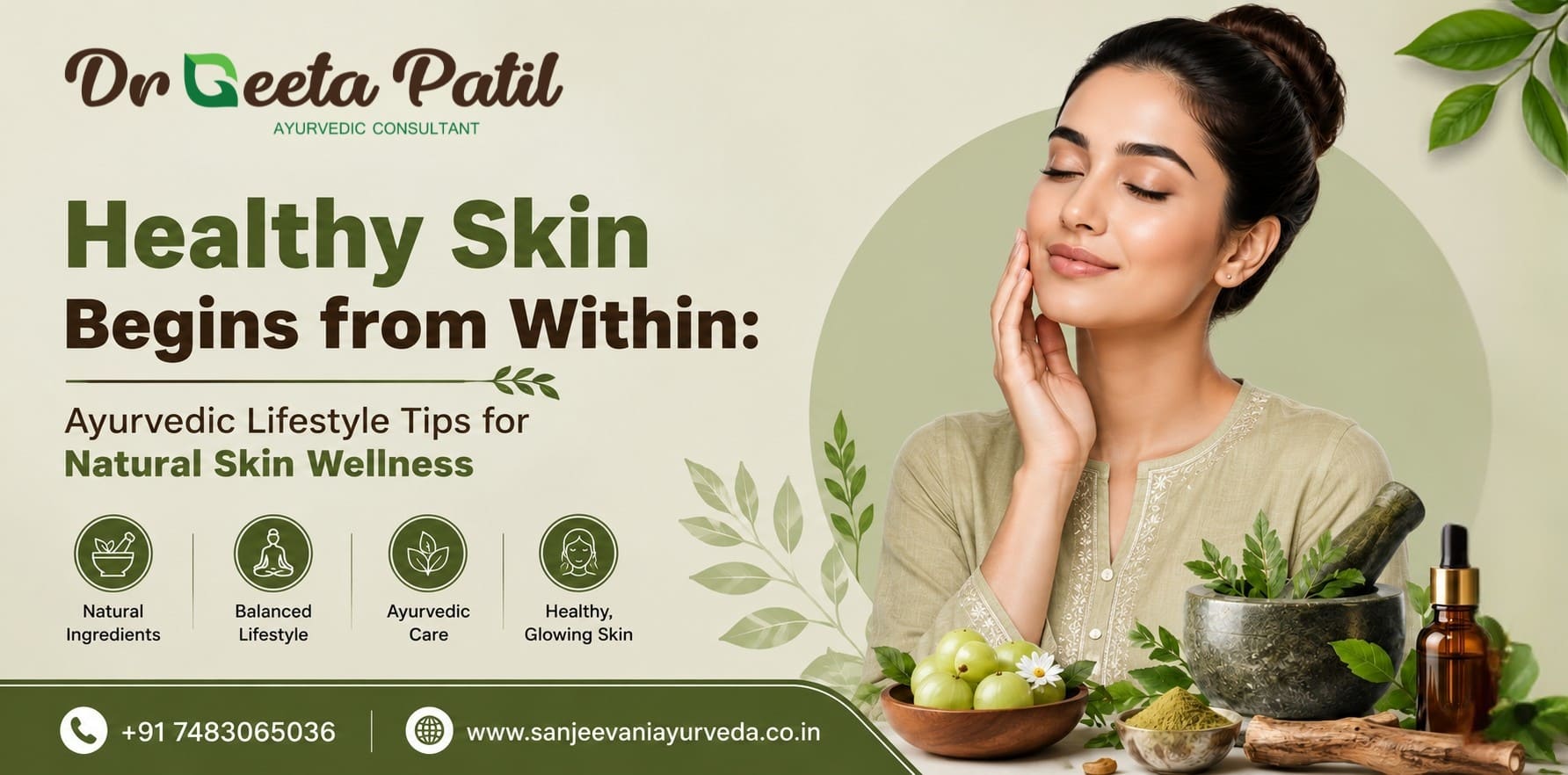
Healthy, glowing skin is often associated with skincare products, cosmetic treatments, and beauty routines. While these may contribute to maintaining the skin's appearance, Ayurveda views skin wellness as an outcome of balanced daily habits, nutrition, and overall well-being.
As one of the world's oldest traditional systems of wellness, Ayurveda emphasizes maintaining balance between the body, mind, and lifestyle to support overall wellness. Rather than focusing only on external skincare, it highlights the role of balanced nutrition, consistent daily routines, quality sleep, stress management, and seasonal living in promoting overall well-being, which may also be reflected in the condition of the skin.
Every individual has unique lifestyle patterns, environmental exposures, and personal needs. For this reason, Ayurveda promotes personalized wellness practices instead of a one-size-fits-all approach. Consistent, healthy lifestyle habits may help support skin wellness over time.
In this guide, we'll explore how Ayurveda views skin wellness, understand the role of body constitution (Doshas), and learn simple lifestyle practices that may support natural skin health as part of a holistic approach to well-being.
At Sanjeevani Ayurveda, our practitioners evaluate each individual's Prakriti (body constitution), lifestyle, dietary habits, and wellness goals before recommending personalized Ayurvedic lifestyle practices.
Why Ayurveda Takes a Different Approach to Skin Wellness
According to Ayurveda, skin wellness reflects the body's overall balance rather than being viewed as a separate concern. According to traditional Ayurvedic principles, healthy skin is influenced by the way the body functions internally, the quality of daily habits, and the ability to maintain harmony between physical, mental, and environmental factors.
Unlike approaches that focus primarily on external skincare, Ayurveda encourages looking at the bigger picture. Daily habits such as balanced nutrition, adequate sleep, physical activity, and seasonal routines play an important role in supporting overall well-being. These lifestyle choices may influence how the skin looks and feels over time.
Another key principle of Ayurveda is that wellness is highly individual. People's bodies respond differently to food, climate, routines, and environmental conditions. Because of these natural differences, Ayurvedic practitioners traditionally recommend personalized lifestyle guidance rather than following the same routine for everyone.
This approach focuses on building sustainable daily habits that support long-term well-being. By developing healthy habits that suit an individual's unique constitution and lifestyle, people may be better equipped to support their overall well-being, including the natural appearance of their skin.
Understanding Skin Through the Ayurvedic Doshas
One of the foundational concepts in Ayurveda is the idea of Doshas, which describe three primary functional energies to influence an individual's physical and mental characteristics. According to Ayurvedic philosophy, every person has a unique combination of Vata, Pitta, and Kapha, often referred to as their Prakriti or natural constitution.
Rather than categorizing skin into only common types such as oily, dry, or combination, Ayurveda traditionally considers how an individual's dominant Dosha may influence skin characteristics. Understanding your constitution can help guide lifestyle choices and daily routines that are more aligned with your personal needs.
Vata Dosha
Vata is traditionally associated with the elements of air and space. Individuals with a dominant Vata constitution may naturally experience skin that appears dry, thin, or rough. Because Vata is associated with movement and dryness, maintaining regular routines, staying adequately hydrated, and supporting overall nourishment are commonly emphasized in Ayurvedic lifestyle practices.
Pitta Dosha
Pitta is associated with the elements of fire and water and is traditionally linked with warmth and transformation. People with a dominant Pitta constitution may have skin that appears sensitive or reacts more easily to heat and environmental factors. Ayurveda often encourages lifestyle habits that promote balance through moderation, hydration, and suitable dietary choices appropriate for individual needs.
Kapha Dosha
Kapha is associated with the elements of earth and water and is traditionally connected with stability and structure. Individuals with a dominant Kapha constitution may naturally have thicker or well-moisturized skin but may also experience increased oiliness. Ayurveda generally recommends maintaining an active lifestyle, following balanced routines, and choosing habits that support overall equilibrium.
Why Understanding Your Dosha Matters
Ayurveda recognizes that no two individuals are exactly alike. While one routine may suit one person, another may benefit from different lifestyle practices based on their constitution, environment, age, and daily routine.
Understanding your Dosha helps you recognize your body's natural tendencies and choose lifestyle practices that suit your constitution. With guidance from a qualified Ayurvedic practitioner, individuals can learn about personalized lifestyle practices that may support overall wellness and help maintain healthy-looking skin in a natural and sustainable way.
Dinacharya: An Ayurvedic Daily Routine for Healthy-Looking Skin
In Ayurveda, Dinacharya refers to a structured daily routine that supports overall well-being through consistency and mindful living. Rather than focusing only on skincare products, this traditional practice encourages habits that help maintain balance in the body and mind. Following a consistent routine suited to your individual needs may help support skin wellness over time.
While every person's routine may differ, the following Ayurvedic practices are commonly recommended as part of a balanced lifestyle.
Begin Your Day with Hydration
Starting the day by drinking water is a simple habit that supports normal body functions after a night's rest. Ayurveda traditionally encourages mindful hydration as part of a healthy morning routine. Individual water requirements vary depending on factors such as age, activity level, and climate.
Practice Gentle Self-Care
Ayurveda places importance on caring for the body through simple daily rituals. One well-known practice is Abhyanga, a traditional self-massage using suitable oils before bathing. This practice is traditionally believed to support relaxation and skin nourishment while encouraging body awareness. The choice of oil may vary depending on an individual's constitution and preferences.
Cleanse the Skin Gently
Keeping the skin clean helps remove dirt, sweat, and environmental impurities that accumulate throughout the day. Ayurveda generally encourages using gentle cleansing methods that suit your skin type rather than relying on harsh products that may affect the skin's natural balance.
Stay Physically Active
Daily movement is an important part of an Ayurvedic lifestyle. Activities such as yoga, walking, stretching, or light exercise may support overall fitness, circulation, and emotional well-being. Choosing an activity that can be practiced consistently is often more beneficial than occasional intense workouts.
Follow Regular Meal Timings
Ayurveda emphasizes eating meals at consistent times each day. Rather than skipping meals or eating irregularly, maintaining a structured eating pattern may support overall wellness and healthy daily functioning. Mindful eating, without distractions, is also considered an important aspect of Ayurvedic living.
Prioritize Restful Sleep
Quality sleep allows the body to undergo its natural restorative processes. Ayurveda encourages maintaining a regular sleep schedule by going to bed and waking up at similar times each day. Creating a calming bedtime routine and reducing screen exposure before sleep may support better rest and overall well-being.
Seasonal Lifestyle Tips (Ritucharya)
Ayurveda recognizes that seasonal changes may influence how the body responds to its surroundings. Ritucharya, or seasonal living, encourages adapting daily habits according to changing weather conditions to help maintain overall balance throughout the year.
Although individual needs may vary, making small adjustments to your routine as the seasons change may support both general wellness and skin comfort.
Summer
Warmer temperatures and increased sun exposure may affect how the skin feels during the summer months.
Helpful lifestyle practices may include:
- Staying adequately hydrated throughout the day.
- Choosing lighter, freshly prepared meals.
- Wearing breathable clothing.
- Limiting prolonged exposure to intense sunlight whenever possible.
- Following a gentle skincare routine suitable for your skin type.
Monsoon
During the rainy season, increased humidity and environmental moisture may influence skin comfort for some individuals.
Lifestyle habits that may be helpful include:
- Keeping the skin clean and dry.
- Wearing clean, breathable clothing.
- Following a balanced diet prepared with fresh ingredients.
- Maintaining regular physical activity when practical.
- Paying attention to overall hygiene during periods of high humidity.
Winter
Cold weather and lower humidity levels may contribute to dryness for some individuals.
Simple winter wellness habits include:
- Drinking enough fluids throughout the day.
- Using appropriate moisturizers according to your skin type.
- Including healthy fats as part of a balanced diet.
- Protecting the skin from excessive cold and dry winds.
- Maintaining consistent daily routines despite seasonal changes.
Rather than following the same routine throughout the year, Ayurveda encourages observing how seasonal changes affect your body and adjusting your lifestyle accordingly. Personalized guidance from a qualified Ayurvedic practitioner may help you better understand seasonal practices that align with your individual constitution.
Foods Traditionally Associated with Skin Wellness
Nutrition is considered an essential part of maintaining overall wellness in Ayurveda. Instead of focusing on individual "superfoods" or quick dietary solutions, it encourages consuming a balanced variety of fresh, wholesome foods that support overall wellness.
Since nutritional needs differ from person to person, food choices should ideally reflect individual preferences, lifestyle, and health requirements.
Fresh Seasonal Fruits and Vegetables
Seasonal produce provides a variety of vitamins, minerals, and naturally occurring plant compounds that contribute to a balanced diet. Including a colorful selection of fruits and vegetables may support overall health as part of a nutritious eating pattern.
Whole Grains
Whole grains such as brown rice, millet, and whole wheat are commonly included in balanced meals. They provide dietary fiber and other nutrients that support normal digestive function and sustained energy throughout the day.
Lentils and Legumes
Lentils, beans, and other legumes are valuable sources of plant-based protein and are frequently included in traditional Indian diets. Combining them with vegetables and whole grains can help create balanced meals.
Nuts and Seeds
Almonds, walnuts, flaxseeds, sesame seeds, and similar foods contain healthy fats and essential nutrients. When eaten in appropriate portions as part of a varied diet, they may contribute to overall nutritional well-being.
Traditional Ayurvedic Herbs and Spices
Ayurveda has traditionally incorporated herbs and spices such as turmeric, amla (Indian gooseberry), coriander, cumin, and fennel into everyday cooking. These ingredients have long been valued within Ayurvedic dietary practices. Their use should be considered part of a balanced diet rather than as substitutes for medical care or prescribed treatments.
Mindful Eating Matters
Ayurveda not only emphasizes what you eat but also how you eat. Traditional recommendations include:
- Eating freshly prepared meals whenever possible.
- Maintaining regular meal timings.
- Avoiding overeating.
- Eating in a calm and distraction-free environment.
- Paying attention to hunger and fullness cues.
Mindful eating supports healthy dietary habits and overall well-being.
Everyday Habits That May Affect Skin Wellness
While genetics, age, and environmental conditions all play a role in how skin looks and feels, everyday lifestyle choices may also influence overall skin wellness. Ayurveda encourages developing mindful habits that support balance rather than relying on occasional corrective measures. Identifying and improving certain daily practices may contribute to maintaining healthy-looking skin over time.
Irregular Daily Routines
Consistency in daily habits is a key principle of Ayurvedic living. Frequently changing meal times, inconsistent sleep schedules, or an unstructured routine may affect overall well-being. Establishing regular habits for eating, sleeping, and physical activity can help create a more balanced lifestyle.
Environmental Exposure
Daily exposure to sunlight, dust, pollution, and changing weather conditions may influence skin comfort. Protecting your skin from excessive environmental exposure and cleansing it gently at the end of the day can be a practical part of maintaining healthy skin.
Inadequate Sleep
Sleep supports the body's natural restorative processes. Regular sleep deprivation or inconsistent sleep patterns may affect overall physical and mental well-being, which can sometimes be reflected in a tired or dull appearance. Maintaining a consistent sleep schedule may support both general wellness and skin health.
Ongoing Stress
Modern lifestyles often involve work pressures, long screen hours, and busy schedules. While occasional stress is a normal part of life, managing it through relaxation techniques, mindfulness, yoga, or enjoyable hobbies may support emotional balance and overall wellness.
Skipping a Balanced Diet
Frequently relying on highly processed foods or irregular eating habits may make it more challenging to maintain a balanced nutritional intake. Ayurveda traditionally encourages freshly prepared meals made with a variety of wholesome ingredients as part of a healthy lifestyle.
Using Products Unsuitable for Your Skin
Not every skincare product is suitable for every individual. Using products that do not match your skin type or overusing harsh cleansers and exfoliants may affect skin comfort. Choosing a simple skincare routine appropriate for your individual needs is often a more sustainable approach.
Ayurveda encourages making small, sustainable improvements to everyday habits. Small, consistent lifestyle changes may have a positive influence on overall well-being and help support naturally healthy-looking skin over time.
When to Consider Consulting an Ayurvedic Practitioner
General lifestyle practices can provide valuable guidance for maintaining overall wellness, but every individual has unique needs influenced by their body constitution, daily routine, dietary preferences, and environmental factors. Ayurveda recognizes these individual differences and emphasizes personalized guidance rather than universal recommendations.
You may consider consulting a qualified Ayurvedic practitioner if you would like to:
- Understand your unique Prakriti (body constitution).
- Learn about Ayurvedic lifestyle practices suited to your daily routine.
- Receive personalized dietary and wellness guidance based on traditional Ayurvedic principles.
- Better understand seasonal routines that may support overall well-being.
- Develop sustainable habits that align with your individual wellness goals.
During a consultation, an Ayurvedic practitioner typically considers multiple aspects of your lifestyle, including your daily routine, dietary habits, sleep patterns, work environment, and personal wellness objectives before suggesting appropriate lifestyle recommendations.
It is important to remember that Ayurvedic consultations are intended to provide individualized wellness guidance based on traditional principles. If you have persistent skin concerns or underlying medical conditions, you should seek advice from a qualified healthcare professional for appropriate diagnosis and treatment.
While general Ayurvedic principles provide valuable guidance, recommendations are most effective when tailored to an individual's unique constitution and health needs through professional consultation.
Why Choose Sanjeevani Ayurveda?
At Sanjeevani Ayurveda, we believe that lasting wellness begins with understanding the individual rather than offering the same solution to everyone. Our approach is rooted in traditional Ayurvedic principles while encouraging practical lifestyle habits that fit modern living.
Our experienced practitioners take the time to understand each individual's body constitution, daily routine, dietary patterns, and wellness goals before providing personalized guidance. This holistic approach allows us to recommend lifestyle practices that are tailored to your unique needs.
Our Approach Includes:
- Personalized Ayurvedic Consultations based on your individual constitution (Prakriti).
- Lifestyle and Wellness Guidance rooted in traditional Ayurvedic principles.
- Dietary and Daily Routine Recommendations designed to support long-term well-being.
- Holistic Health Education that empowers individuals to make informed lifestyle choices.
- Patient-Centered Care focused on understanding individual needs and promoting sustainable wellness habits.
Conclusion
Healthy skin is supported by consistent daily care, balanced nutrition, and healthy lifestyle habits. Ayurveda encourages a holistic approach by considering the connection between nutrition, daily habits, seasonal living, and an individual's unique body constitution. While everyone's wellness journey is different, adopting sustainable lifestyle practices may help support overall well-being, which can also be reflected in the appearance of the skin over time.
Understanding your body's natural tendencies and making mindful choices that align with your lifestyle can be a valuable step toward long-term wellness. Whether it's following a consistent daily routine, choosing balanced meals, adapting to seasonal changes, or seeking personalized guidance, small improvements practiced regularly may make a meaningful difference.
If you would like to explore Ayurvedic lifestyle practices tailored to your individual needs, consulting experienced practitioners at Sanjeevani Ayurveda, an Ayurvedic Clinic in JP Nagar, Bangalore, can help you better understand traditional Ayurvedic principles and develop a personalized wellness plan that supports your overall health and well-being.
Disclaimer: This article is intended for educational and informational purposes only. The information presented is based on traditional Ayurvedic principles and should not be considered medical advice, diagnosis, or treatment. Ayurveda emphasizes individualized wellness, and recommendations may vary depending on a person's body constitution (Prakriti), lifestyle, and health needs. If you have a skin condition, persistent symptoms, or any underlying medical concern, consult a qualified healthcare professional or an experienced Ayurvedic practitioner before making changes to your diet, lifestyle, or wellness routine. Results may vary from person to person.
Frequently Asked Questions (FAQs)
Ayurveda views healthy skin as a reflection of overall well-being rather than focusing only on external skincare. It emphasizes balanced nutrition, consistent daily routines, adequate rest, stress management, and personalized lifestyle practices that may support natural skin wellness.
According to Ayurveda, the three Doshas are Vata, Pitta, and Kapha. These functional energies are traditionally believed to influence an individual's physical characteristics, including natural skin tendencies. Every person has a unique combination of these Doshas, known as their Prakriti.
Dinacharya refers to a traditional Ayurvedic daily routine that includes healthy habits such as maintaining regular meal timings, practicing personal hygiene, staying physically active, getting adequate sleep, and following a structured lifestyle to support overall wellness.
Ritucharya is the Ayurvedic practice of adapting daily habits according to seasonal changes. It encourages lifestyle adjustments that may help maintain balance and support overall well-being throughout the year.
A balanced diet rich in fruits, vegetables, whole grains, legumes, healthy fats, and adequate hydration supports overall health. Ayurveda traditionally encourages mindful eating and freshly prepared meals as part of a healthy lifestyle that may also contribute to healthy-looking skin.
Yes. Choosing skincare products that suit your individual skin type and using them consistently may help maintain skin comfort. Ayurveda also emphasizes complementing external skincare with healthy lifestyle habits for a more holistic approach.
You may consider consulting a qualified Ayurvedic practitioner if you would like personalized guidance on your body constitution (Prakriti), lifestyle habits, dietary practices, or traditional Ayurvedic wellness routines suited to your individual needs.