

About Us
Sanjeevani Ayurveda, is a centre for healthcare through authentic Ayurveda established
by Dr Geeta Patil.
Dr Geeta is an ayurvedic Consultant with over 20 years of experience. She
treats patients by giving indetail counselling regarding treatment , diet and lifestyle management
and if necessary customised Panchakarma therapies.
Contact Info
- Bangalore, India
- (+91) 7483065036
- wellness.sanjeevani@gmail.com
- All Days Open: 8.00AM to 8.00PM
Blog
How Food, Digestion, and Nutrient Absorption Influence Overall Wellness in Ayurveda
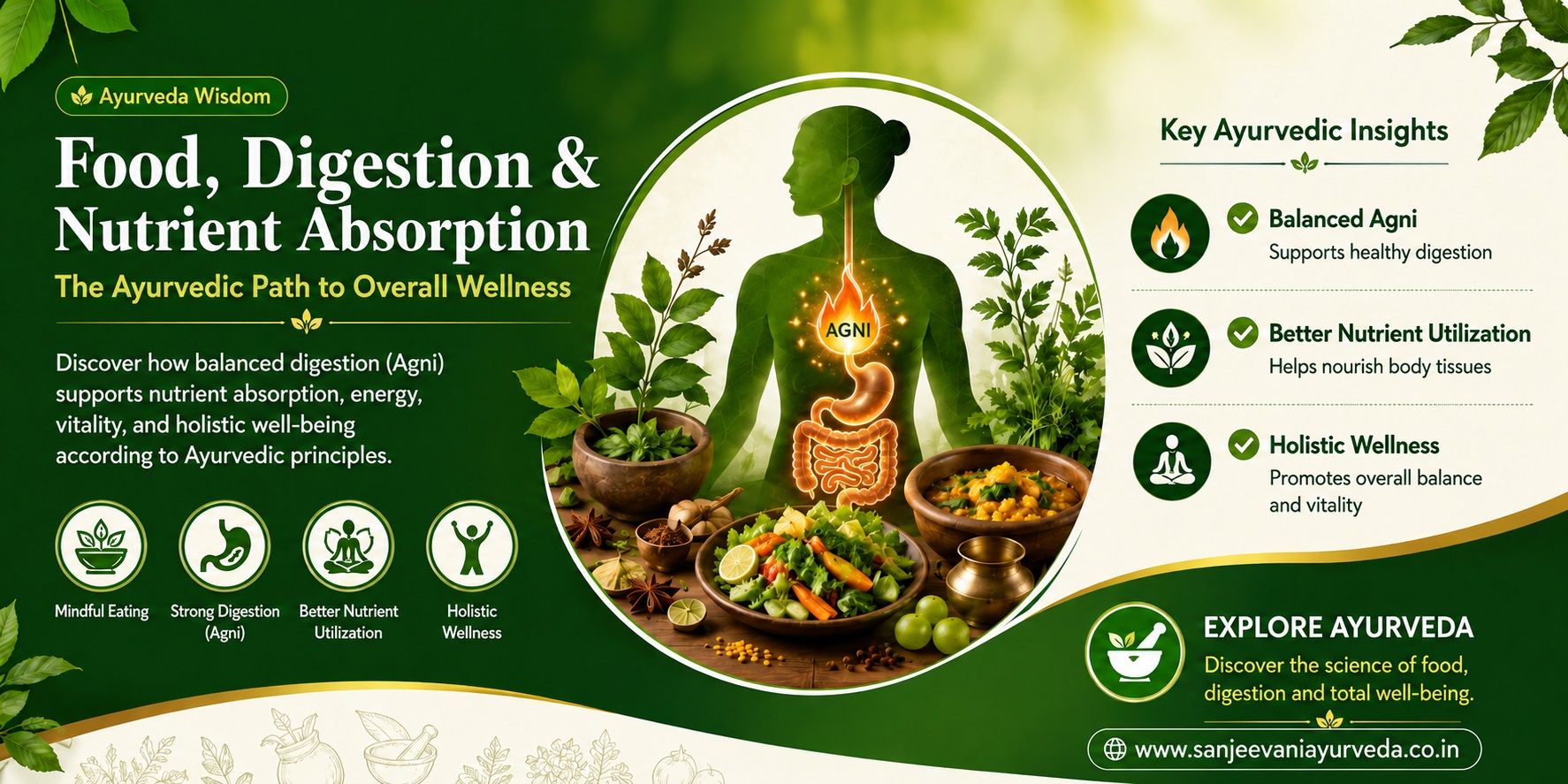
Ayurveda views digestion as an important part of overall well-being. While eating nutritious foods is essential, traditional Ayurvedic principles suggest that the body's ability to digest, absorb, and utilize nutrients also plays a significant role in maintaining balance and vitality.
This holistic perspective focuses not only on what we eat but also on how our bodies process the food we consume.
Understanding Agni in Ayurveda
What Is Agni?
In Ayurveda, digestion is governed by a concept known as Agni, often translated as "digestive fire." Agni is traditionally understood as the force responsible for digesting food and transforming it into nourishment for the body.
Why Is Agni Important?
According to Ayurvedic teachings, balanced Agni may support efficient digestion and nutrient utilization. For this reason, maintaining digestive balance is considered an important aspect of overall wellness.
Understanding Ama and Digestive Balance
What Is Ama?
Ayurveda describes Ama as undigested or improperly processed food residues that may accumulate when digestion is not functioning optimally.
The Ayurvedic Perspective
Traditional Ayurvedic teachings suggest that supporting healthy digestion helps maintain the body's natural balance. This is one reason why Ayurveda places significant emphasis on mindful eating and healthy lifestyle practices.
Why Nutrient Absorption Matters
Digesting food is only one step in the nourishment process. After digestion, the body must absorb and utilize nutrients effectively.
Ayurveda teaches that true nourishment depends not only on what is consumed but also on how efficiently nutrients are processed and utilized by the body.
Food Quantity and Meal Timing in Ayurveda
According to Ayurvedic principles, nourishment depends not only on the quality of food but also on the quantity consumed and the timing of meals.
- Starting the day with light and nourishing foods.
- Consuming the main meal when digestion is strongest, often around midday.
- Choosing lighter foods in the evening.
- Eating only when genuinely hungry.
Doshas and Individual Digestive Tendencies
Ayurveda recognizes three primary doshas:
- Vata
- Pitta
- Kapha
Each individual has a unique constitutional balance that may influence digestive tendencies, food preferences, and lifestyle needs.
Simple Ayurvedic Habits That May Support Digestive Wellness
Maintain Regular Meal Times
Consistent meal timings and mindful portion control are traditionally considered important aspects of digestive wellness.
Choose Fresh and Wholesome Foods
Traditional Ayurvedic practices often emphasize fresh, minimally processed foods as part of a balanced diet.
Practice Mindful Eating
Eating slowly, chewing thoroughly, and minimizing distractions during meals may help create a more mindful eating experience.
Manage Daily Stress
Relaxation practices, mindfulness, and healthy routines may contribute to overall well-being and digestive comfort.
Prioritize Rest and Physical Activity
Adequate sleep and regular movement are commonly recommended as part of a balanced lifestyle.
Conclusion
Ayurveda views digestion as more than simply breaking down food. The concepts of Agni, Ama, and Dosha balance highlight the importance of how the body processes and utilizes nourishment.
By paying attention to digestion, nutrient absorption, mindful eating, and healthy daily habits, individuals may support their wellness journey in a holistic way.
Key Takeaway:
In Ayurveda, effective digestion and nutrient absorption are considered important aspects of nourishment and overall well-being.
🌿 Visit: www.sanjeevaniayurveda.co.in
Disclaimer
This article is intended for educational purposes only and should not be considered medical advice. The information presented is based on traditional Ayurvedic principles and is not intended to diagnose, treat, cure, or prevent any disease. Results may vary. Consult a qualified healthcare professional or Ayurvedic practitioner for personalized advice regarding your health and wellness needs.
Frequently Asked Questions
1. How does an Ayurvedic Wellness Centre in JP Nagar help support digestive wellness?
An Ayurvedic Wellness Centre in JP Nagar focuses on traditional Ayurvedic principles such as Agni (digestive fire), mindful eating, and personalized lifestyle recommendations. These practices are designed to support digestive balance and overall well-being.
2. Why is Agni important according to an Ayurvedic Wellness Centre in JP Nagar?
According to Ayurvedic teachings, Agni plays a central role in digestion and nutrient utilization. An Ayurvedic Wellness Centre in JP Nagar may provide guidance on dietary and lifestyle habits that help maintain balanced digestion.
3. Can an Ayurvedic Wellness Centre in JP Nagar provide personalized dietary guidance?
Yes. Ayurveda recognizes that every individual has a unique constitution (Dosha balance). An Ayurvedic Wellness Centre in JP Nagar may recommend personalized dietary and lifestyle approaches based on individual needs and wellness goals.